I hear it every day in strategy meetings: "We need to optimize the user journey." It’s a nice, high-level sentiment. But if you walk into a room and say that without defining what you’re actually measuring, you’re just throwing jargon at the wall to see what sticks.
As a product marketing lead who has spent a decade fighting in the trenches of B2B SaaS and mobile app growth, I’ve learned that optimization isn't about making things "prettier." It’s about answering one, non-negotiable question: What does the user do next?
If you can't map the specific behavioral trigger to the next immediate action, you aren't optimizing; you’re guessing. Let’s strip away the fluff and look at how behavioral analytics actually moves the needle.
The Data Trap: Moving Beyond Vanity Metrics
Most teams look at "Total Active Users" or "Page Views." Those are vanity metrics. They tell you who showed up, but they don’t tell you why they stayed or why they bounced. To truly perform user journey optimization, you have to look at the individual interaction points.
Research from McKinsey Digital highlights that the most successful companies are those that synthesize behavioral data to predict intent before the user even realizes what they want to do next. You aren’t just observing behavior; you are architecting a path of least resistance.
When I work with product designers, we look for the "ghost clicks"—the areas where users expect a response but don't get one. If you’re ignoring mobile performance—loading times, frame rate drops, or clunky touch targets—you’ve already lost the battle. Here's a story that illustrates this perfectly: was shocked by the final bill.. Mobile performance is not a "nice to have." It is the foundation of your journey.
The "Tiny Frictions" Audit
Retention doesn’t die with a bang; it dies with a thousand tiny cloud-based infrastructure for apps frictions. I keep a running list of these "friction killers." Here are the ones I see most often in underperforming apps:
- The "One More Click" Syndrome: Forcing a user to navigate through three menus to reach a core feature. Inconsistent Signifiers: Using a blue button for "Save" on one screen and a grey one on another. Loading Screen "Black Holes": When an app hangs for 800ms without a skeleton screen, users assume the app is broken. Unsolicited Onboarding Overload: Dropping a 10-step tour on a user who just wants to perform one specific action.
Frictionless UX: The Art of Low-Friction Navigation
When we talk about friction reduction, we are talking about engineering a highway for the user. If they have to think about where to go, they are already thinking about whether they should be there at all.

Take, for instance, high-performing streaming platforms. They don't make you click "Play" on a recommendation if they can avoid it. They use auto-play, personalized queues, and "resume watching" prompts to ensure that the journey from opening the app to consuming content is essentially instantaneous.
B2B SaaS teams often over-complicate this. They think that because their software is "complex," the journey must be complex. That is a dangerous lie. Even in enterprise software, your user is a human being used to the standards of Spotify and Netflix. If your UI isn't as intuitive as a consumer app, you are losing.
Building Continuous Interaction Loops
A static journey is a dead journey. You need a continuous interaction loop—a cycle where the user’s behavior informs the system, and the system responds with a nudge that encourages the next behavior.
According to insights from B2B News Network (B2BNN), the companies winning the long game are those that build "ecosystem stickiness." This happens when your product doesn't just solve https://dibz.me/blog/the-psychology-of-retention-designing-rewards-that-actually-work-1169 one problem, but becomes the default destination for a specific category of tasks.
How do you build this? You map the "micro-moments."
Action Behavioral Signal Optimal "Next" Trigger User logs in Inactive for 3 days "Welcome back! Pick up where you left off." User searches for a feature Query returns 0 results Proactive support chat or "Did you mean X?" User completes a task Increased time on screen Gamified badge or "Progress Milestone" alertGamification: Even for the "Serious" Apps
There is a stigma against gamification in non-gaming apps. People think it’s childish. But let’s look at the MrQ casino app. They excel at user journey optimization because they treat the user experience like a feedback loop. Every action is rewarded with clear, visual feedback. They use progress indicators and personalized rewards to keep the user engaged.
You don't need a slot machine to use gamification. You need to use the psychology of completion. Behavioral analytics show that users are 40% more likely to complete a complex setup process if they see a progress bar that is already 20% filled. That’s not gaming the system; that’s human nature. If you are building a B2B project management tool, give them a "Quick Win" checklist. It triggers a dopamine hit that drives them to the next task.. Exactly.
Personalization: The End of the "One-Size-Fits-All" Journey
You ever wonder why we are long past the era of static landing pages. If your dashboard looks the same for a power user as it does for a first-day sign-up, you have failed at personalization.
Recommendation engines are no longer just for e-commerce. If your app collects behavioral data, you should be using it to curate the user’s workspace. If a user spends 90% of their time on your "Reports" tab, why does your home screen still show them "Helpful Getting Started Tips" that they don’t need?
Optimization means stripping away the irrelevant. If the user doesn't need it, hide it. If they do need it, put it in their line of sight before they have to search for it.
Final Thoughts: The "What Next?" Mindset
Optimization is an endless cycle of observing, hypothesizing, and testing. It isn't a project you finish; it’s a standard you maintain.
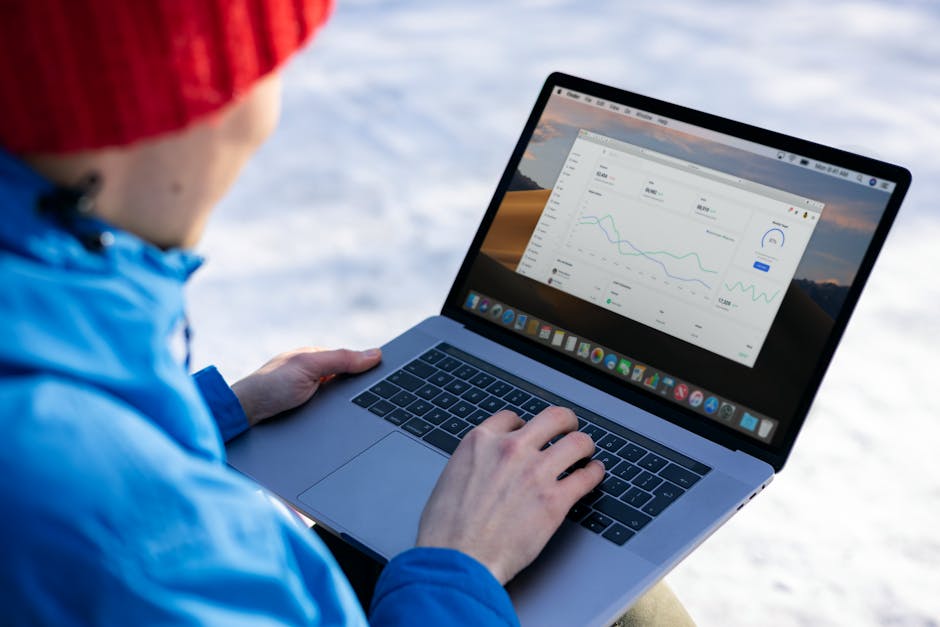
Next time you look at your product metrics, don't ask how many people clicked a button. Ask: What was the friction they felt before they clicked it? What was the behavioral signal that made them think it was the right move? And, most importantly, what does the user do next?
If you can answer those three things, you aren't just optimizing a journey. You’re building a habit. And in the world of SaaS and mobile, habits are where the revenue lives.